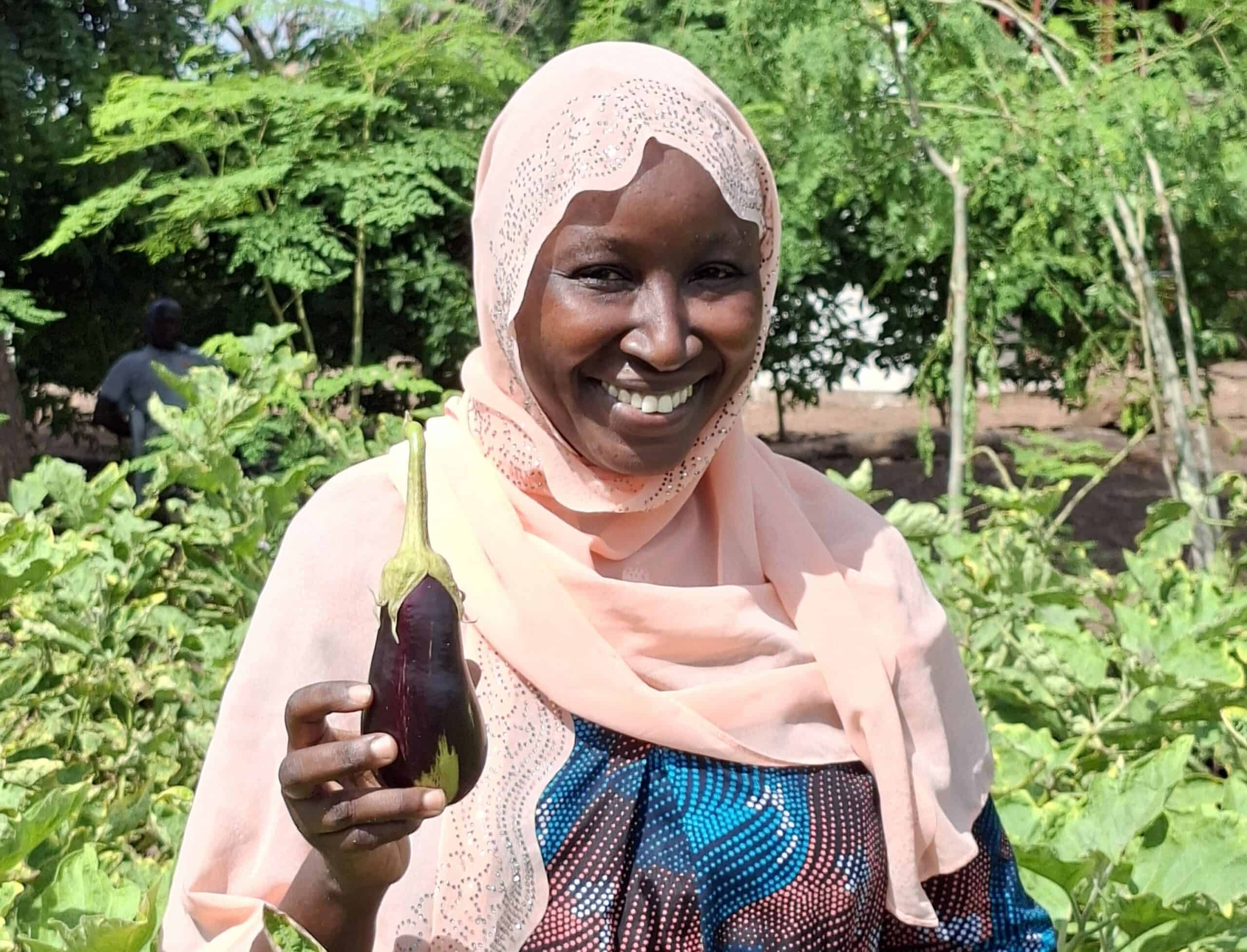
When you enter Fatou Ndeye Diop’s compound in Tamba region, Senegal, you can’t help but marvel at the greenery that greets you. Her forest garden is just next to her house compound. Her land looks quite green with different crops growing in the garden. Fatou, 32, is a mother of 10 children living in Tawfekh village. She is part of the Khewal group, meaning “blessing” group.
In her second year of the project, she has indeed experienced tremendous blessings and great changes around her, “I have noticed a lot of cool breeze around here, which has made me more inclined to be in my forest garden often. You will find me taking care of the crops most of my free time. I have since taken a lot of time away from the main family fields where my husband grows millet and maize to concentrate on my forest garden. I have already harvested and eaten some of the foods from this farm,” she mentioned as she walked past her eggplant shrubs.
In her farm, she has planted bitter eggplants, okra, chillies, tomatoes, hibiscus, moringa trees, and some fruit trees – mango and avocado, that are growing beautifully on the farm.
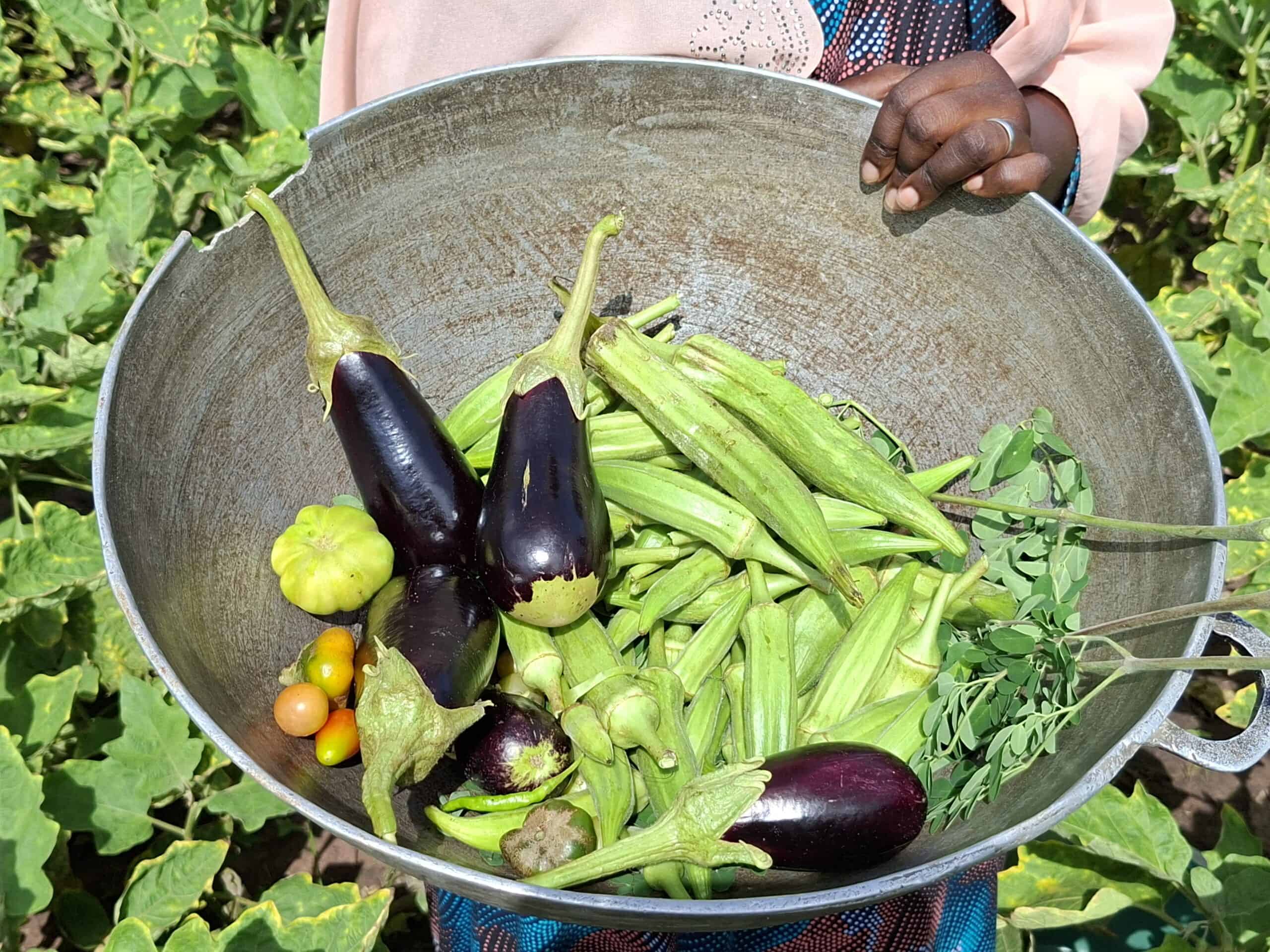
She takes care of the family’s food and financial needs. With the income earned from selling produce from the farm, she buys staples like rice, sugar, and oil from the market for family meals.
Fatou loves the bitter eggplant which she grows and then cooks with rice, a favorite delicacy in her home,” The children love this meal a lot,” she said. She works with her children on the farm most of the time to grow the food they eat at home.
She has started selling to neighbors recently, and this has also bonded them to her as they quickly became friends. They are largely interested in the okra, bitter eggplants, and tomatoes, which are used daily and in most meals in the household.
“My neighbors, especially the women, like to come to the farm often to see the work that is happening here. Sometimes they help me with the farm work and buy crops for their household use. Since they discovered that I have hibiscus, they come to buy the flowers to make juice”
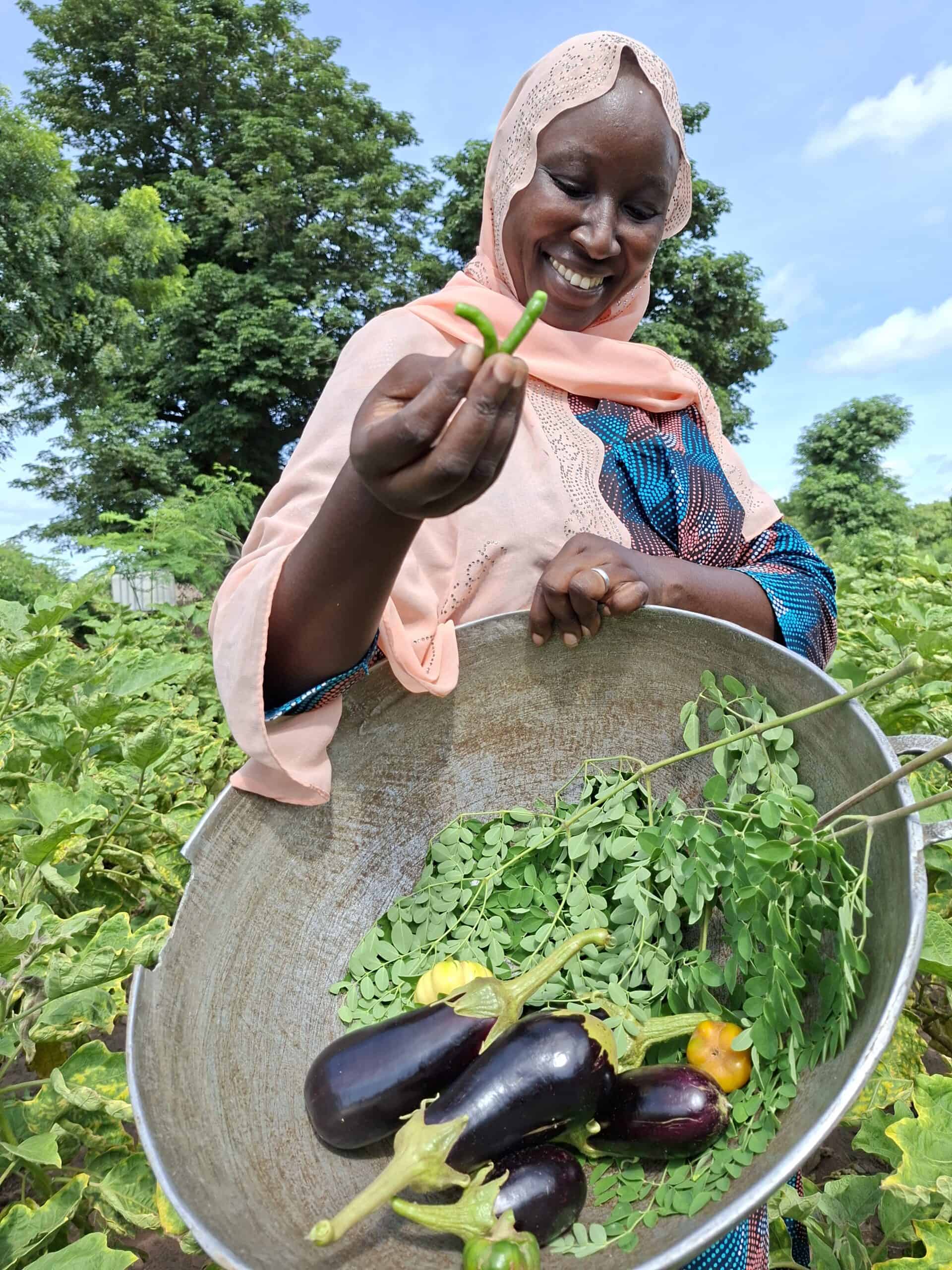
The money she gets from the market from selling produce from her forest garden complements and chips into her large family budget.
Fatou looks forward to when her trees will bear fruit. “I am looking forward to the mangoes especially.” She mentions with a smile. Mangoes are her favorite fruit and when she started her forest garden, one of the key seedlings she made sure was in plenty was the mango trees.