FOR IMMEDIATE RELEASE
$2.9 Million Investment Advances Farmer-Led Regenerative Agriculture & Climate Resilience in Tanzania’s Lake Victoria Watershed
Mwanza, Tanzania, March 25, 2026 — Trees for the Future (TREES) has secured a $2.9 million grant from a US-based Anonymous Foundation to expand smallholder-led solutions for regenerative agriculture and landscape restoration in Tanzania’s Mwanza Region.
Over four years (2026–2029), the investment will support 2,780 smallholder farmers annually in restoring approximately 3,000 acres of degraded land through TREES’ sustainable Forest Garden Approach. The initiative advances integrated food systems strengthening, climate adaptation, and ecosystem restoration within the Lake Victoria Basin.
Mwanza lies within the Lake Victoria Watershed, a globally significant ecosystem experiencing mounting pressure from soil degradation, monocropping, and increasingly erratic rainfall patterns. Agriculture accounts for roughly 70% of rural household income in the region, making climate resilience and rural economic mobility central to both community stability and inclusive growth.
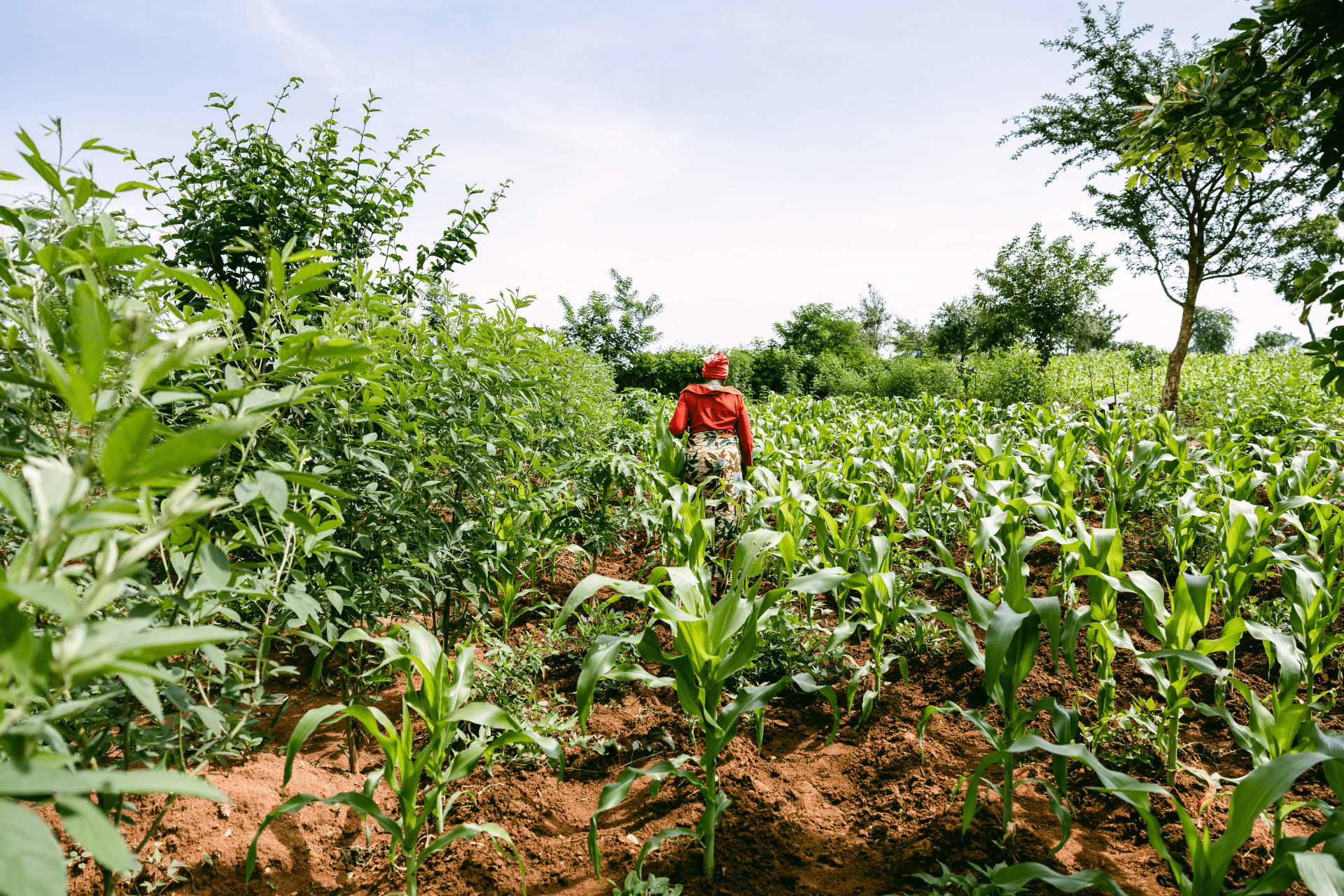
Through a multi-year, field-based training model led by local staff, participating farmers transition 1–2 acre monocropped maize and sunflower plots into diversified agroforestry systems grounded in principles of agroecology and climate-smart agriculture. Each Forest Garden integrates 2,500–4,000 trees alongside fruit, vegetables, grains, and fodder crops.
These integrated systems are designed to strengthen soil fertility, increase productivity, diversify livelihoods, and enhance farmers’ ability to adapt to climate variability while generating measurable ecosystem services and biodiversity co-benefits.
Key expected outcomes include:
– Restoration of approximately 3,000 acres annually
– Increased household food availability and livelihood diversification for 21,900 family members
– Improved soil health and water management to support climate resilience
– Reduced long-term pressure on the Lake Victoria Watershed ecosystem
– Strengthened community stability through savings groups and sustainable land management planning
“Smallholder farmers are central to building climate resilience within global food systems,” said Cate O’Kane, Vice President of Development & Communications at Trees for the Future.
“What they often lack is sustained investment in locally led, farm-centered climate adaptation strategies. This new funding will help build an integrated, regenerative agriculture model designed to restore degraded landscapes while strengthening rural economic mobility and advancing inclusive growth. We’re so grateful that this foundation understands that for climate adaptation to be durable, it must be fully grounded in farmer-led implementation.”
According to the Food & Agriculture Organization of the United Nations (FAO), smallholder farmers produce roughly one-third of the world’s food yet face disproportionate climate risk. In Sub-Saharan Africa, rising temperatures and rainfall variability are projected to significantly affect agricultural productivity, reinforcing the urgency of scalable, nature-based solutions that support localized climate action and long-term watershed conservation.
The expansion in Mwanza contributes to global efforts under the UN Decade on Ecosystem Restoration and aligns with Sustainable Development Goals 2 (Zero Hunger), 13 (Climate Action), and 15 (Life on Land). The Forest Garden Approach reflects an integrated landscape restoration strategy that delivers climate adaptation benefits while generating biodiversity co-benefits and strengthening food system resilience.
TREES has worked in Tanzania since 2016 and has trained 12,874 farmers nationally, planting more than 36 million trees and benefiting over 43,300 people. In 2024, the organization was named a UN World Restoration Flagship for its measurable contribution to global ecosystem restoration. Across the region, TREES also works in Kenya and Uganda with a further 33,824 farmers, impacting over 222,182 individuals. As global climate finance increasingly prioritizes farmer-centered climate finance and nature-based solutions, strategic partnerships will be essential to scale locally led regenerative agriculture and landscape restoration efforts across the Lake Victoria Basin and other climate-vulnerable regions.
For inquires:
Kendall Garifo
Marketing & Communications Director
Trees for the Future
kendall@trees.org
About Trees for the Future
Trees for the Future (TREES) partners with smallholder farmers to advance regenerative agriculture, climate resilience, and integrated landscape restoration. Through its four-year Forest Garden Approach, farmers implement agroecological and climate-smart agriculture systems designed to increase incomes, diversify livelihoods, strengthen ecosystem services, and restore degraded land.
Since 1989, TREES has trained more than 527,000 people, restored over 99,000 acres, and planted more than 419 million trees. In 2024, TREES was named a UN World Restoration Flagship for its measurable contribution to global ecosystem restoration. Learn more at trees.org.