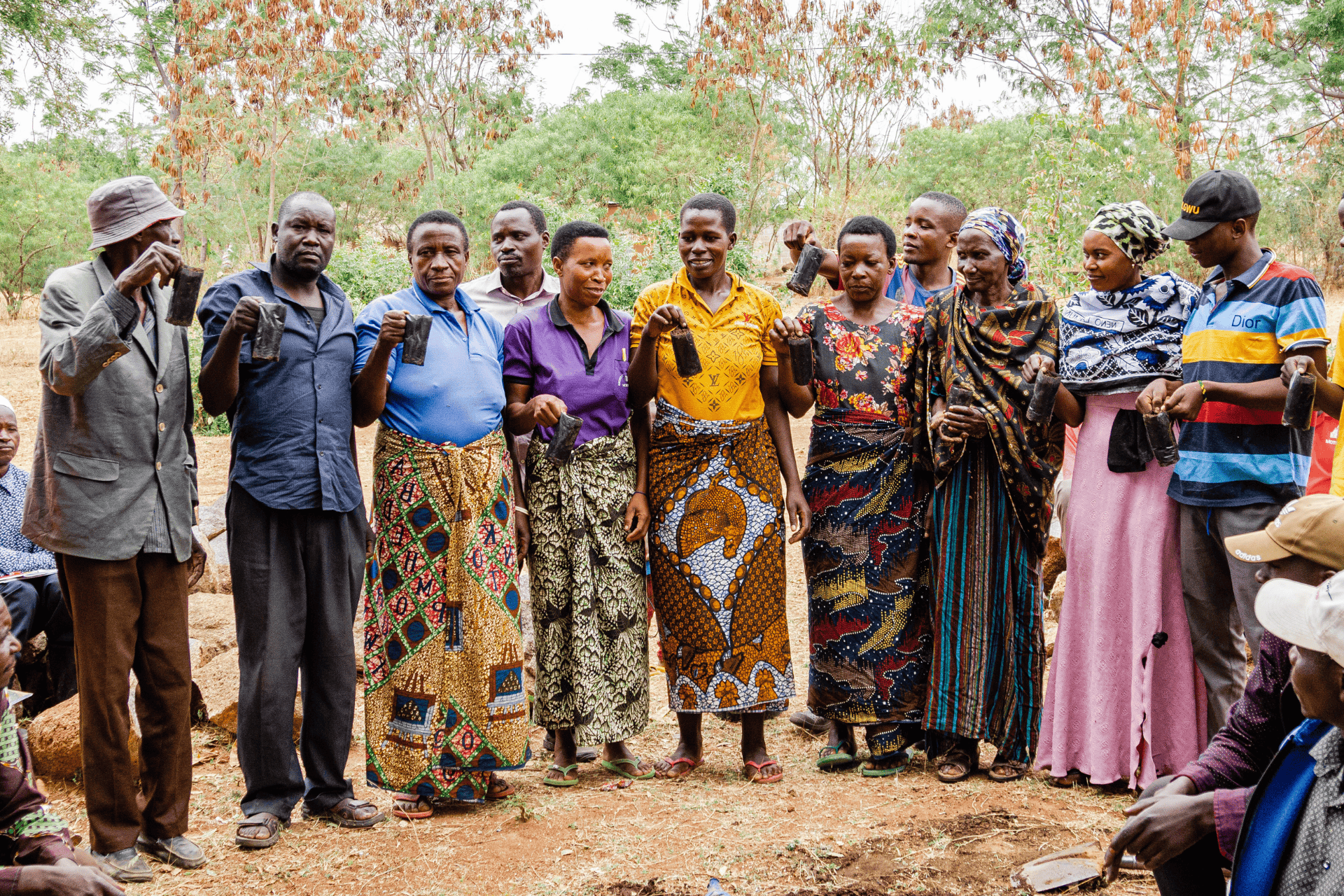
The lake-shore lowlands and river valleys surrounding Lake Victoria form one of Tanzania’s most productive agricultural regions. In the large region of Mwanza, roughly 70% of rural household income depends on farming, livestock, fishing, and other land-based livelihoods.
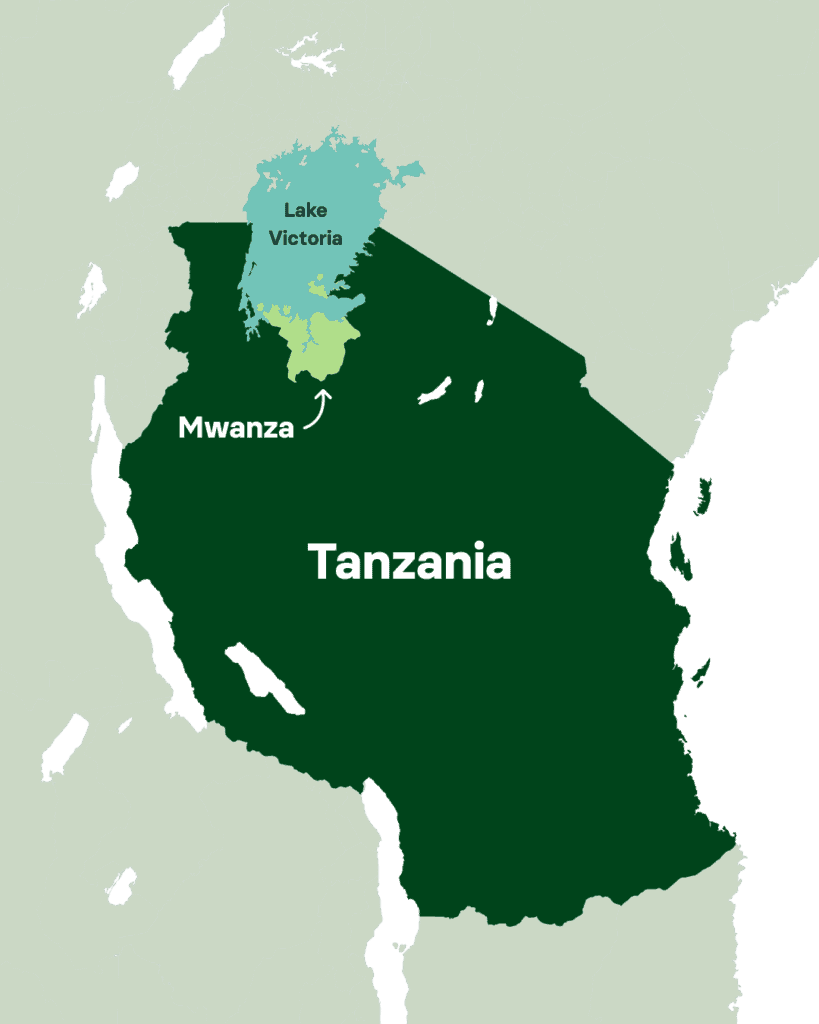
As Mwanza and the surrounding area experience mounting pressures from soil degradation, monocropping, and increasingly erratic weather patterns, building climate resilience and economic mobility is central to both community stability and inclusive growth.
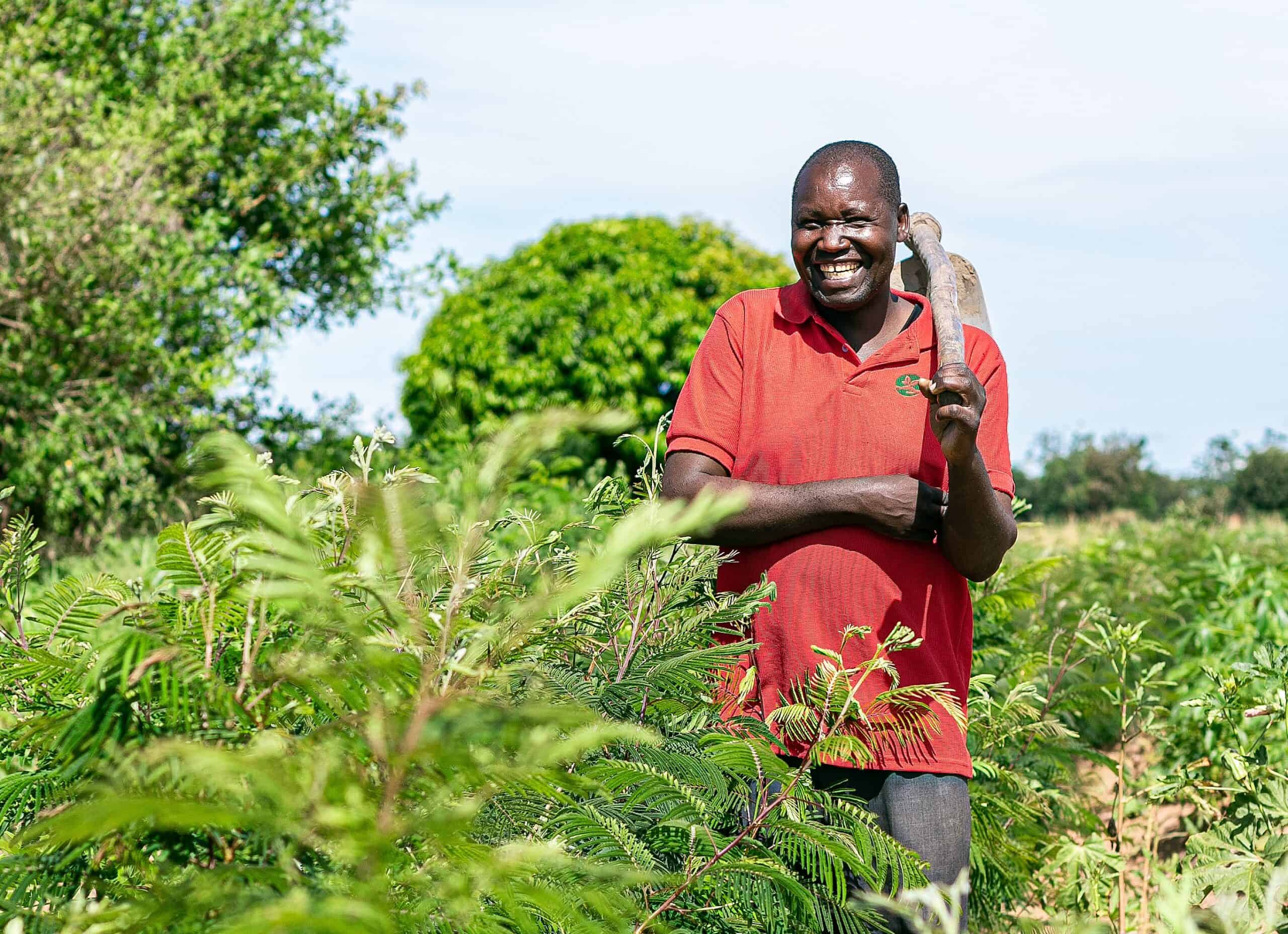
At Trees for the Future (TREES), we are already partnering with 1,280 farming families in Mwanza to restore their land and strengthen their livelihoods through our regenerative agroforestry approach. For farmers like Abeli, the transformation has been tangible.
Like many in the region, Abeli’s land was overgrazed and eroding. Each rainy season washed away more of the land and soil that his family depended on.
Through TREES’ agroforestry approach, Abeli began restoring his farm with diverse crops and trees that protect the soil and provide food throughout the year. Today, his land is more resilient, erosion has drastically reduced, and his family now enjoys a steady harvest of nutritious food from their own garden. With training, seed management, and mentorship from TREES staff, Abeli began applying techniques that offered more than just farming—it offered hope for a sustainable future.
Now, a new investment will allow this work to expand even further. A grant from an anonymous U.S.-based foundation will support 2,780 smallholder farmers each year for the next 4 years, restoring approximately 3,000 acres of degraded land through hands-on, field-based training led by local staff. Participating farmers will transition from degraded, mono-cropped farms to diverse agroforestry systems designed to improve soil fertility, increase farm productivity and income, diversify livelihoods, and strengthen climate resilience.
And the benefits do not stop at the individual family. The outsized impact of this work will also improve overall soil health and water management in the region, reducing the long-term pressures on the Lake Victoria Watershed ecosystem.
Across Mwanza, the connection between healthy land and thriving livelihoods is clear. When farmers have the tools, training, and resources they need to restore their land, lasting prosperity takes root. As momentum grows, the opportunity to scale a farmer-led restoration across the Lake Victoria Watershed is significant. With additional partners and funders, TREES aims to expand these climate-smart farming systems to thousands more farmers across the region.
If you’re interested in becoming a Strategic Partner and helping smallholder farmers build lasting change, contact Katerina at katerina@trees.org.